
The 5-point pattern explained round by round, mini stars for the tree and gift wrap, a stiff tree topper, the 5-petal...
0
Carrello della spesa
0 prodotti
Search in blog
Blog categories
Latest posts
5 cozy hobbies to try to switch your brain off
Read more
Read More
Turn off notifications, slow down and let your hands do the work. From timeless classics like crochet and embroidery...
Crochet and Knit Cowl: Patterns, Tutorials and Yarns
Read more
Read More
A warm, soft neck warmer made by you: our makers' tutorials in crochet and on circular needles, sizes for women, men...
Crochet doesn’t hibernate: here’s how we’ll wear it this fall
Read more
Read More
Autumn 2026 crochet trends are all about details, layering and texture. From fringed ponchos and vests to crochet...
Christmas crochet decorations: ideas, patterns and yarns
Read more
Read More
Baubles, stars, wreaths, houses and amigurumi: all the Christmas decorations to crochet, with step-by-step tutorials...
Popular posts

Summer 2026 Crochet Bags: the Trending Models
Mini, medium, maxi or shopper? Discover the crochet bag models trending for summer 2026, with the Tessiland creators'...
Read more
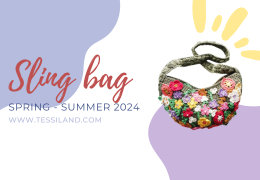
Crochet bags for spring summer 2024. 5 models of handmade sling bags.
Discover the latest trends for Spring/Summer 2024 with our exclusive guide to 5 crochet sling bag models. Perfect for...
Read more
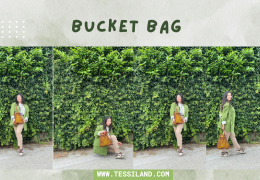
The Crochet Net Bucket Bag: A Trendy Accessory for 2024
Learn how to make a crochet net bucket bag with our simple and detailed tutorial. Use elastic cord, a size 5 crochet...
Read more
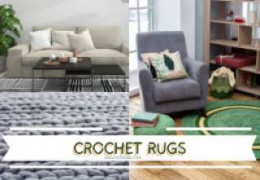
Crochet rugs, a passion that is becoming a trend.
In this article, dive into the art of crochet rugs and discover how to create unique and personalized pieces for your...
Read more
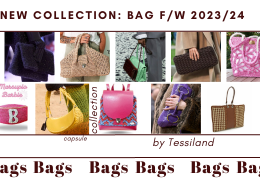
From runways to street style: the trendiest crochet bags.
Are you also passionate about handmade items and want to create your own capsule collection of crochet bags? Here are...
Read more

Filet crochet charts: what it is, how to read them and what to make
Filet crochet charts: what it is, how to read them and what to make
Light curtains at the window, embroidered edgings on the sheets, doilies that look from another era: behind these beauties there's almost always one technique, filet. It's one of the oldest and most charming ways to crochet — and, surprise, one of the easiest to learn: it all comes down to two squares, one filled and one empty.
In this guide I'll explain what filet crochet is, how to read a chart (the scariest part, and actually the simplest), the base stitch and what you can make. At the end you'll also find the right thread to start. All you need is a hook and a ball of fine cotton.
What filet crochet is
Filet is a net-like work: picture a regular grid of squares, some filled and some empty. By combining filled and empty squares you "draw" motifs, letters, flowers, hearts, animals — just like the pixels of an image. That's the charm of filet: with one repeated stitch you get very elaborate designs.
It's almost always worked in fine cotton (like cotton lisle) with a thin hook, to get that airy, precise mesh. It's perfect for curtains, edgings, doilies, table runners and light stoles.
How to read a filet chart
A filet chart is not a complicated diagram full of symbols: it's simply a grid of squares, like the squared paper from school. Each square is a cell, and there are only two kinds:
- Empty square (blank cell): the "see-through" part of the design, the net;
- Filled square (coloured cell or with an X): the "solid" part that forms the motif.
You read it like a graph: start from the bottom and go up row by row. The odd row (right side) reads right to left, the even row (wrong side) left to right — exactly as you turn the work on the hook. Counting the squares tells you how many filled and empty cells to make in a row. That's it: if you can count to three, you can read a filet chart.
The base stitch of filet
All of filet comes from just two elements: the double crochet and the chain. Here's how the chart cells translate:
- Empty square: 1 double crochet, 2 chains, skip 2 stitches of the row below, 1 double crochet. This makes the "hole" of the net;
- Filled square: 1 double crochet, then 2 double crochets on the stitches below (the square is closed by double crochets side by side). This makes the "block".
The double crochet at the sides is always shared between one square and the next: that's why the count always works out. Make a small swatch of 5-6 squares, alternating filled and empty: in ten minutes you "feel" the rhythm and never forget it.
What to make with filet
Once you get the mechanism, filet opens a world of timeless projects:
- Curtains and net panels: the great classic, with flower, heart or border motifs along the bottom edge;
- Edgings and borders: for sheets, towels, tablecloths — a strip of filet transforms a plain fabric;
- Doilies and runners: for the table and furniture, in white or cream cotton;
- Stoles and light shawls: filet in a fashion version, soft and openwork.
Video: PISTOIA filet stole
by Egle Breme — filet applied to a modern, light stole, explained step by step.
Watch the tutorial →
by Egle Breme — filet applied to a modern, light stole, explained step by step.
Watch the tutorial →
Which thread to use for filet
Filet is at its best with cotton lisle (fil d'Écosse): a smooth, shiny, strong mercerised cotton that makes every block and space crisp. The fineness (the thread "number") sets the size of the squares: the higher the number, the finer the thread and the smaller the work. All our cottons meet the highest European standards.

Amanda — cotton lisle n5
The thickest of the three: clearly visible squares and quick work. Perfect for curtains and bold borders.
Discover Amanda n5 →
The thickest of the three: clearly visible squares and quick work. Perfect for curtains and bold borders.
Discover Amanda n5 →

Adele — cotton lisle n8
The ideal middle ground: fine enough for detailed designs, practical enough not to tire you. Great for doilies and runners.
Discover Adele n8 →
The ideal middle ground: fine enough for detailed designs, practical enough not to tire you. Great for doilies and runners.
Discover Adele n8 →

Anastasia — cotton lisle n12
Fine and elegant: for the small-scale filet of tradition, delicate edgings and refined work.
Discover Anastasia n12 →
Fine and elegant: for the small-scale filet of tradition, delicate edgings and refined work.
Discover Anastasia n12 →
Find the full range in the cotton lisle category, more options among the cottons and blends, and the right hook (thin, matched to the thread number) in the crochet hooks category.
Frequently asked questions
Is filet good for beginners?
Yes, it's one of the most accessible techniques: you only need the double crochet and the chain. The "hard" part — reading the chart — is really just counting filled and empty squares.
Where do I find filet charts?
You can draw them yourself on squared paper (each square = one cell) or start from traditional curtain and border charts. The beauty of filet is that any "pixel" design can become a chart.
Which hook for cotton lisle?
A thin hook, matched to the thread number (the higher the cotton number, the thinner the hook). The suggested size is often on the ball band. You'll find them all in the crochet hooks category.
What's the difference between filled and empty squares?
The empty square is a "hole" (1 double crochet, 2 chains, 1 double crochet), the filled one is "closed" by double crochets side by side. Alternating them draws the motif on the net.
Filet has the feel of things made slowly, yet it's surprisingly modern: from grandma's curtains to today's stoles, all it takes is a grid and two squares. Where will you start? A simple border to get the hang of it, or straight to a curtain?
Rosaria Tessiland®
.jpg)




Leave a comment