
Three ways to make crochet Christmas baubles: the amigurumi sphere with a round-by-round pattern, mesh-covered...
0
Carrello della spesa
0 prodotti
Search in blog
Blog categories
Latest posts
Crochet Christmas Star: Easy Pattern, Mini Stars and Tree Topper
Read more
Read More
The 5-point pattern explained round by round, mini stars for the tree and gift wrap, a stiff tree topper, the 5-petal...
5 cozy hobbies to try to switch your brain off
Read more
Read More
Turn off notifications, slow down and let your hands do the work. From timeless classics like crochet and embroidery...
Crochet and Knit Cowl: Patterns, Tutorials and Yarns
Read more
Read More
A warm, soft neck warmer made by you: our makers' tutorials in crochet and on circular needles, sizes for women, men...
Crochet doesn’t hibernate: here’s how we’ll wear it this fall
Read more
Read More
Autumn 2026 crochet trends are all about details, layering and texture. From fringed ponchos and vests to crochet...
Popular posts

Summer 2026 Crochet Bags: the Trending Models
Mini, medium, maxi or shopper? Discover the crochet bag models trending for summer 2026, with the Tessiland creators'...
Read more
Crochet bags for spring summer 2024. 5 models of handmade sling bags.
Discover the latest trends for Spring/Summer 2024 with our exclusive guide to 5 crochet sling bag models. Perfect for...
Read more
The Crochet Net Bucket Bag: A Trendy Accessory for 2024
Learn how to make a crochet net bucket bag with our simple and detailed tutorial. Use elastic cord, a size 5 crochet...
Read more
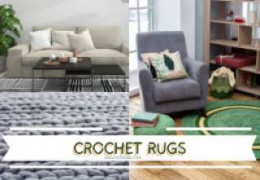
Crochet rugs, a passion that is becoming a trend.
In this article, dive into the art of crochet rugs and discover how to create unique and personalized pieces for your...
Read more
From runways to street style: the trendiest crochet bags.
Are you also passionate about handmade items and want to create your own capsule collection of crochet bags? Here are...
Read more
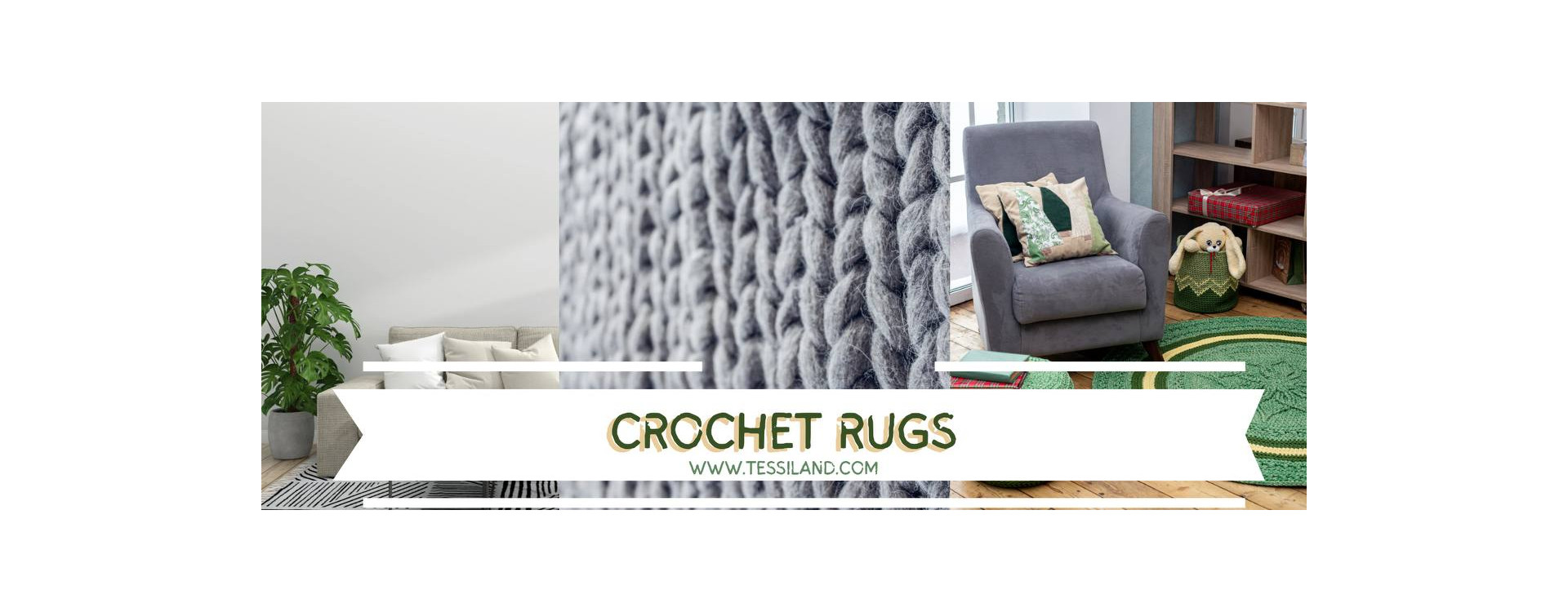
Crochet rugs, a passion that is becoming a trend.
One of the requests that is often made in assistance concerns the world of home decor, and we receive many requests for help or suggestions regarding the making of crochet RUGS.
The first piece of advice we want to give you is to understand firstly what style you will match your creation with and then in which corner of the house you will place it. It's appropriate that a kitchen rug is different from a bathroom rug, or that a bedroom rug changes compared to one for the living room, etc...
But let's start step by step and analyze all the questions that are often asked about rugs.
What yarns to use for making rugs?
There is no specific yarn to use; depending on the style and project, we can decide which fibers to weave. For an outdoor rug, for example, we might use jute or raffia.
- JUTE RAFFIA
For a kitchen rug, we might use a cord, resistant and with medium stiffness, like the Thai Sublime, for example.
For a bathroom rug, we might consider lycra tape, or if you want a more rustic effect, jute is also good.
For a bedroom rug, we might consider the tagliatella ribbon, or the pandoro queen, or even the color chart of the ternes.
Another item to consider for rugs could be soft fiber yarn, like the dion, for a furry effect, or the bravissimo or the donny, to make animal-shaped rugs, a really cute idea for our children's rooms.
How Much Yarn is Needed for Making a Crochet Rug?
The amount of yarn needed depends on several factors, such as the size of the rug, the stitch used, the tension, and the size of the crochet hook.
Here are some aspects to consider:
Size of the Rug
Small Rugs (e.g., 60x90 cm):
For small rugs, 500 to 1000 grams of yarn might be sufficient, depending on the thickness and type of stitch used.
Medium-sized Rugs (e.g., 120x180 cm):
For a medium-sized rug, the amount of yarn needed can vary from 2 to 4 kg.
Large Rugs (e.g., 200x300 cm):
For large rugs, the amount of yarn required can be 5 kg or more.
Type of Yarn
Thin Yarns:
Using thinner yarn will require a greater amount to cover the same area compared to a thicker yarn.
Thick Yarns:
Thick yarns, such as cotton for rugs or bulky wool, cover more surface area and therefore require less material.
Size of the Crochet Hook
Large Hooks:
Using a large crochet hook (e.g., 10 mm or more) with thick yarns can reduce the amount of yarn needed, as the work will be more "airy."
Small Hooks:
With a smaller crochet hook, the work will be denser and may require more yarn.
Type of Stitch
Simple Stitches:
Stitches like the single crochet or double crochet consume less yarn compared to more complex techniques.
Elaborate Stitches:
More complex stitches or those with texture (like the popcorn stitch) may require more yarn to cover the same area.
Practical Tips
Calculating Usage:
A good practice is to start by making a sample with the chosen stitch, dimensions, and yarn you intend to use. Measure how much yarn is consumed for the sample and then calculate the necessary amount based on the total dimensions of the rug.
Purchase Extra:
It is always advisable to buy a little more yarn than estimated to avoid running short, especially if you are using a color or type of yarn that might not be easily available in the future.
What Types of Rugs Can Be Handmade?
Handmaking rugs offers a wide range of creative possibilities, allowing for the exploration of various models, styles, and techniques. Here are some popular examples of rug types that can be handmade:
Knot-Tied Rugs
Persian/Oriental Rugs: These rugs are famous for their intricate geometric, floral, or figurative patterns and require a very refined knotting technique.
Kilim Rugs:
These are flat-woven, pile-less rugs characterized by vivid and colorful geometric patterns.
Crochet and Knit Rugs
Round Rugs: Often made with crochet, these rugs can feature floral or geometric designs and are perfect for adding a touch of elegance to any room.
Striped Rugs: Simple yet effective, striped rugs can be made in knitting or crochet, using contrasting colors for a dynamic visual effect.
Braided Rugs
Rustic Style Braided Rugs: Often made with strips of recycled fabric, these rugs have a rustic look and are eco-friendly.
Swedish (Rag Rugs): Made with the technique of braiding, they use materials like old sheets or clothes, creating a vintage look.
Hand-Tufted Rugs
Contemporary Rugs: These rugs can have modern and abstract designs and are made by inserting strands of wool into a textile base, then fixed with an adhesive.
Rugs with Traditional and Cultural Motifs
Navajo Rugs: Inspired by Native Americans, these rugs are known for their geometric patterns and use of natural colors.
African Rugs: Often characterized by tribal motifs and bold use of color.
Patchwork and Mosaic Rugs
Patchwork Rugs: Combine pieces of different fabrics, creating a unique and personalized design.
Mosaic Rugs: Similar to patchwork, but with pieces cut into geometric shapes that fit together like a puzzle.
Themed or Customized Rugs
Children's Rugs: With designs of animals, maps, alphabets, or fairy-tale themes, perfect for children's rooms.
Customized Rugs: Made to order, they can include specific designs, colors, or personalized initials.
The choice of the model will depend on the desired style, the level of skill in the art of weaving, knotting, or crocheting, and the function the rug will have in the home. Each type offers a unique way to express creativity and create a piece that not only embellishes the space but also tells a story through its design and creation.
What Models Do Creative YouTubers Offer?
Let's start with two models suitable for beginners and beyond.
Tutorial: "Soft Elegance" easy crochet rug by Criss's Corner.
Our home is our nest, a safe haven where we feel secure... and making it suit our life is a pleasure. With this ultra-soft crochet rug, we gift ourselves an elegant and precious home decor item, made by our own hands. It's very easy and quick to make, using an ultra-soft yarn.
Made with dion and a non-slip net
Here are the instructions:
Discover the yarn:
Here is the work process:




Leave a comment