
The 5-point pattern explained round by round, mini stars for the tree and gift wrap, a stiff tree topper, the 5-petal...
0
Carrello della spesa
0 prodotti
Search in blog
Blog categories
Latest posts
5 cozy hobbies to try to switch your brain off
Read more
Read More
Turn off notifications, slow down and let your hands do the work. From timeless classics like crochet and embroidery...
Crochet and Knit Cowl: Patterns, Tutorials and Yarns
Read more
Read More
A warm, soft neck warmer made by you: our makers' tutorials in crochet and on circular needles, sizes for women, men...
Crochet doesn’t hibernate: here’s how we’ll wear it this fall
Read more
Read More
Autumn 2026 crochet trends are all about details, layering and texture. From fringed ponchos and vests to crochet...
Christmas crochet decorations: ideas, patterns and yarns
Read more
Read More
Baubles, stars, wreaths, houses and amigurumi: all the Christmas decorations to crochet, with step-by-step tutorials...
Popular posts

Summer 2026 Crochet Bags: the Trending Models
Mini, medium, maxi or shopper? Discover the crochet bag models trending for summer 2026, with the Tessiland creators'...
Read more
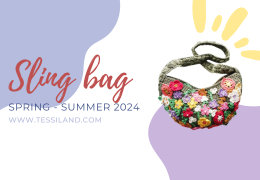
Crochet bags for spring summer 2024. 5 models of handmade sling bags.
Discover the latest trends for Spring/Summer 2024 with our exclusive guide to 5 crochet sling bag models. Perfect for...
Read more
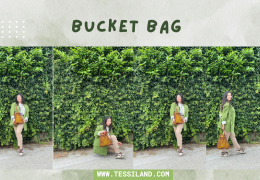
The Crochet Net Bucket Bag: A Trendy Accessory for 2024
Learn how to make a crochet net bucket bag with our simple and detailed tutorial. Use elastic cord, a size 5 crochet...
Read more

Crochet rugs, a passion that is becoming a trend.
In this article, dive into the art of crochet rugs and discover how to create unique and personalized pieces for your...
Read more
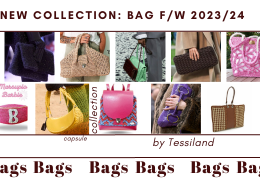
From runways to street style: the trendiest crochet bags.
Are you also passionate about handmade items and want to create your own capsule collection of crochet bags? Here are...
Read more

Amigurumi: What They Are, How to Start and What Materials You Need
Amigurumi are little crocheted toys — animals, characters, objects — born in Japan and now the most beloved project for crocheters all over the world. If you've never made one, this guide explains where to start: what materials to buy, the basic technique to learn, and 5 video tutorials for your first amigurumi.
What Is an Amigurumi and Why It's So Loved
The word "amigurumi" comes from Japanese: ami (to knit/crochet) + nuigurumi (stuffed toy). They are small three-dimensional figures, crocheted in the round, stuffed and decorated with safety eyes, noses and hair.
Why are they the perfect project to start with? Three concrete reasons:
- They're small — you need just a few grams of yarn and a few hours of work
- They use basic stitches — single crochet and chain, nothing else
- The result is immediate — a finished toy you can give away, sell or keep
What You Need to Start: the Complete List
Before starting your first amigurumi, you need 5 things. Nothing more.


You'll also need a 2.5-3 mm hook (one size smaller than the yarn recommends, to get tight stitches that don't let the stuffing out) and a tapestry needle with a rounded tip to sew the parts. If you want to start with everything included, the amigurumi kits contain yarn, eyes, stuffing, hook and instructions in a single box.
The Magic Ring: the First Technique to Master
Every amigurumi starts with the same thing: the magic ring. It's an adjustable loop that closes completely, sealing the central hole — essential because the head, body and legs of amigurumi all begin from a closed circle.
How to make the magic ring in 5 steps:
- Wrap the yarn twice around the index and middle finger of your left hand
- Insert the hook under both strands, grab the working yarn and pull it through
- Make one chain to secure
- Work 6 single crochets into the ring (the standard number for amigurumi)
- Pull the starting tail to close the circle completely — no hole in the centre
It takes 2-3 tries to get the hang of it. It's normal for the first one to come out crooked — the third will be perfect. On Tessiland Studio you'll find video tutorials that show exactly how the fingers move.
5 Easy Amigurumi with Video Tutorials
No need to hunt for patterns online: these are 5 complete step-by-step tutorials from the Tessiland creators, using our yarns. From the simplest to the most elaborate. Every tutorial is on Tessiland Studio.
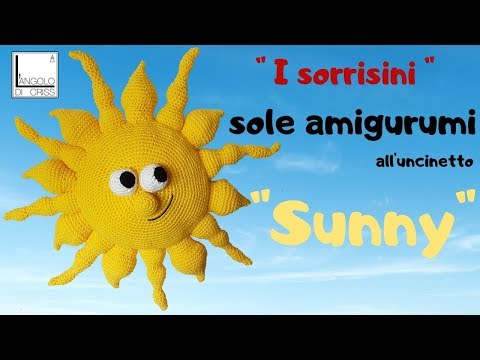
VIDEO TUTORIAL
Amigurumi SUNNY — Sun
By Cristiana Rossi · Level: easy
The sun is a flat amigurumi, perfect for beginners: no complex shapes, just circles and rays. Ideal as a first project or as decoration for a child's room.
tessiland.com/en/misti-lana/20084-edith
Watch the tutorial on Tessiland Studio →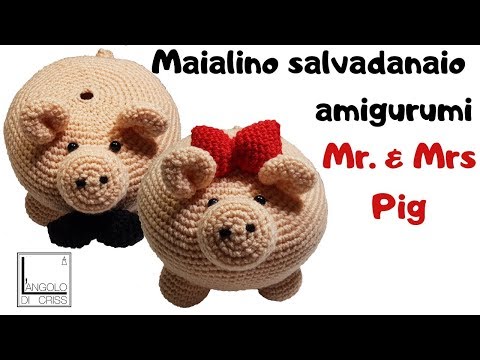
VIDEO TUTORIAL
Amigurumi Pig MR&MRS PIG
By Cristiana Rossi · Level: easy
A classic three-dimensional amigurumi: round body, snout, ears and curly tail. BabyKey yarn has just the right softness for rounded shapes.
Yarn: BabyKey (wool blend, €2.00) · Hook 2.5-3 mm
tessiland.com/en/sconti-quantit/20024-babykey
Watch the tutorial on Tessiland Studio →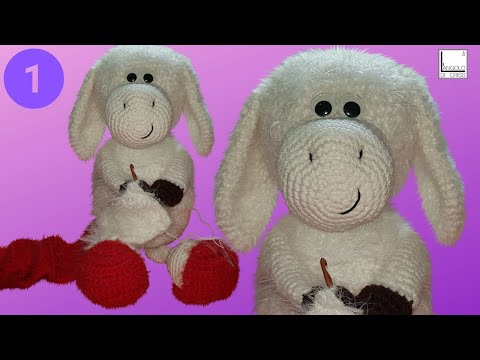
VIDEO TUTORIAL
Amigurumi Sheep MISS MOLLY
By Cristiana Rossi · Level: intermediate
More parts to assemble (head, body, legs, ears) — the next step after your first simple amigurumi. Edith yarn creates the perfect "sheep's wool" effect.
Yarns: Edith + Aretha Slim
tessiland.com/en/misti-lana/20084-edith
Watch the tutorial on Tessiland Studio →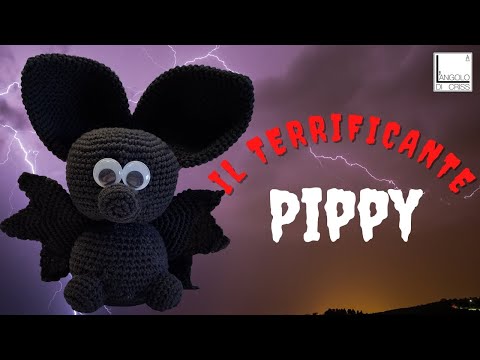
VIDEO TUTORIAL
Amigurumi Bat PIPPY
By Cristiana Rossi · Level: easy
An original amigurumi that's quick to make. The wings are flat (worked separately) and sewn onto the round body — a good exercise for learning assembly.
Yarn: Donny (100% cotton, €4.00)
tessiland.com/en/cotone-e-misti/20001-donny
Watch the tutorial on Tessiland Studio →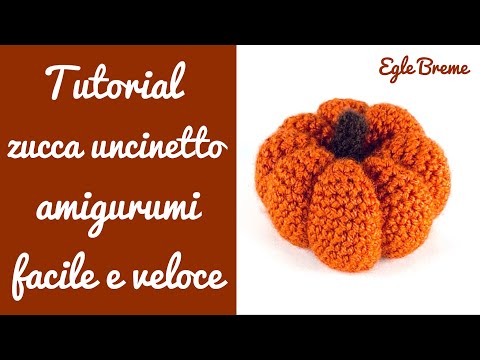
VIDEO TUTORIAL
Amigurumi Pumpkin
By Egle Breme · Level: easy
A single piece with no seams — it's all worked in the round and shaped with the yarn. Perfect for Halloween or as autumn decoration. Bravissimo yarn is super soft and covers well.
Yarn: Bravissimo (acrylic microfibre, €8.90)
tessiland.com/en/acrilico-top-quality/20026-bravissimo
Watch the tutorial on Tessiland Studio →The 3 Most Common Beginner Mistakes
1. Hook too big. If you use the size the yarn recommends (e.g. 4 mm for a n.3 yarn) the stitches will be too wide and the stuffing will show through the holes. For amigurumi, always go down at least one size: n.3 yarn → 2.5 mm hook. Stitches must be tight and compact.
2. Not counting stitches. Amigurumi are worked in a continuous spiral without closing the round. After 3-4 rounds it's very easy to lose count and end up with a lopsided piece. Use a stitch marker (even a different-coloured thread) in the first stitch of each round.
3. Over- or under-stuffing. Too much stuffing deforms the toy and makes a "belly". Too little leaves it floppy. The trick: stuff a little at a time, shape with your hands, and add more before closing. The head should be firm, the body slightly softer.
Find the Perfect Tutorial on Tessiland Studio
Over 2,400 video tutorials using Tessiland yarns: amigurumi, toys, decorations and much more.
Search by name, creator or yarn — find the right project for you in seconds.
Frequently Asked Questions about Amigurumi
How much yarn do you need for an amigurumi?
For a small amigurumi (10-15 cm) 20-30 grams of yarn is enough — one ball of Happy Cotton or a little more. For large toys (30+ cm) you need 80-100 grams. The tutorials on Tessiland Studio always state the exact amount.
What hook do I use for amigurumi?
It depends on the yarn, but the rule is always the same: one size smaller than recommended. With Happy Cotton (recommended 3 mm): use a 2.5 mm. With Donny (recommended 3-4 mm): use a 2.5-3 mm. Stitches must be tight — the stuffing shouldn't show. All the hooks in the dedicated section.
How long does it take to make an amigurumi?
A simple amigurumi (sun, heart, pumpkin) takes 2-3 hours. An animal with legs, ears and a tail takes 5-8 hours spread over 2-3 sessions. The longest part isn't crocheting, it's sewing the parts together.
Can amigurumi be washed?
Yes, if you use cotton yarn (Happy Cotton, Donny). Hand wash in lukewarm water with mild soap, without wringing — lay flat and let air dry. With acrylic yarns (Bravissimo) you can also machine wash at 30° in a delicates bag.
Are amigurumi safe for children?
Yes, if you use safety eyes with a washer (they don't come off) and hypoallergenic stuffing. For babies under 12 months, replace the eyes with embroidered thread — it's safer. Tessiland yarns comply with the highest European safety standards.





Leave a comment