
Three ways to make crochet Christmas baubles: the amigurumi sphere with a round-by-round pattern, mesh-covered...
0
Carrello della spesa
0 prodotti
Search in blog
Blog categories
Latest posts
Crochet Christmas Star: Easy Pattern, Mini Stars and Tree Topper
Read more
Read More
The 5-point pattern explained round by round, mini stars for the tree and gift wrap, a stiff tree topper, the 5-petal...
5 cozy hobbies to try to switch your brain off
Read more
Read More
Turn off notifications, slow down and let your hands do the work. From timeless classics like crochet and embroidery...
Crochet and Knit Cowl: Patterns, Tutorials and Yarns
Read more
Read More
A warm, soft neck warmer made by you: our makers' tutorials in crochet and on circular needles, sizes for women, men...
Crochet doesn’t hibernate: here’s how we’ll wear it this fall
Read more
Read More
Autumn 2026 crochet trends are all about details, layering and texture. From fringed ponchos and vests to crochet...
Popular posts

Summer 2026 Crochet Bags: the Trending Models
Mini, medium, maxi or shopper? Discover the crochet bag models trending for summer 2026, with the Tessiland creators'...
Read more
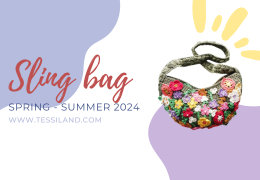
Crochet bags for spring summer 2024. 5 models of handmade sling bags.
Discover the latest trends for Spring/Summer 2024 with our exclusive guide to 5 crochet sling bag models. Perfect for...
Read more
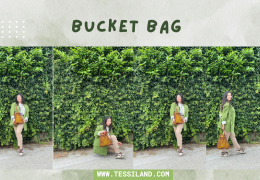
The Crochet Net Bucket Bag: A Trendy Accessory for 2024
Learn how to make a crochet net bucket bag with our simple and detailed tutorial. Use elastic cord, a size 5 crochet...
Read more
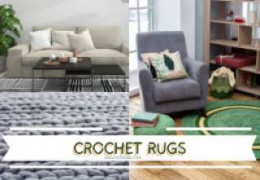
Crochet rugs, a passion that is becoming a trend.
In this article, dive into the art of crochet rugs and discover how to create unique and personalized pieces for your...
Read more
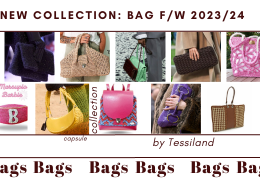
From runways to street style: the trendiest crochet bags.
Are you also passionate about handmade items and want to create your own capsule collection of crochet bags? Here are...
Read more

How to knit for beginners: your guide to getting started
How to knit for beginners: your guide to getting started
If you've landed here, you're probably an eager beginner — or someone getting back to knitting after a while. Either way: welcome to the world of knitting. It's a passion that crosses ages, genders and generations, and the good news is that you need very little to start: one ball of yarn, a pair of needles and a bit of patience.
In this guide you'll find everything in order: what you really need to start, which yarn to choose, how to hold yarn and needles, how to cast on and the basic stitches — knit, purl and garter. At the end you'll also find the easy first project to begin with. It all starts with one stitch.
What you need to start knitting
To learn you don't need complicated gear: yarn and needles, that's it. Then, as you gain confidence, you'll add the accessories. Here are the three types of needles you'll meet:
- Classic straight needles: the basic pair, usually 40 cm, in aluminium, bamboo or plastic. The starting point for scarves and swatches;
- Circular needles: two tips joined by a flexible cable, to knit in the round (hats, seamless sweaters) or wide pieces;
- Double-pointed needles: sets of 4-5 pieces for narrow tubes, like socks and cuffs.

Basic knitting needles 40 cm
The ideal straight pair to start, in several sizes. Almost every knit begins here.
Discover the basic needles →
The ideal straight pair to start, in several sizes. Almost every knit begins here.
Discover the basic needles →
You'll find everything in the knitting needles, circular needles and double-pointed needles categories. The accessories (tape measure, scissors, blunt tapestry needles, stitch holders) can wait: at first, yarn and needles are truly enough.
Video: knitting needles, all the types
by Egle Breme — straight, circular and double-pointed: which ones you need and when.
Watch the tutorial →
by Egle Breme — straight, circular and double-pointed: which ones you need and when.
Watch the tutorial →
Which yarn to choose to start
Feeling the yarn slide through your fingers is one of the joys of knitting. For your first projects the advice is simple: a smooth, medium-weight wool. Smooth yarns (wool, cotton or blends) always show the stitch well and forgive mistakes. Later you can try textured yarns (alpaca, silk, mohair) and fancy ones like chenille. All our yarns meet the highest European standards.

Justin Baby — extrafine merino wool
Smooth, soft and well defined in the stitch: the perfect wool to learn and see every stitch clearly from the start.
Discover Justin Baby →
Smooth, soft and well defined in the stitch: the perfect wool to learn and see every stitch clearly from the start.
Discover Justin Baby →

Mark — merino wool and silk
A fine blend with real character once knitted: smooth on the ball, luminous in the stitch. For those who want a step up.
Discover Mark →
A fine blend with real character once knitted: smooth on the ball, luminous in the stitch. For those who want a step up.
Discover Mark →

Avril — chenille
The cuddle yarn par excellence: velvety and very soft, with a warm plush effect. Lovely for scarves and blankets.
Discover Avril chenille →
The cuddle yarn par excellence: velvety and very soft, with a warm plush effect. Lovely for scarves and blankets.
Discover Avril chenille →
Explore the full range in the baby wool and wool blends categories. Golden rule: match the needle size to the yarn (it's usually shown on the ball band).
How to hold yarn and needles
Before knitting, get comfortable with the hold. There is no single "right" method: try until you find the one that feels good. Relax your shoulders and wrists — knitting needs good hand-eye coordination, hard to have when tense.
The yarn: to keep it flowing, run it over and under your fingers, leaving the fingertips free. Usually the working end runs over the index finger, while the yarn from the ball runs over the little finger. You can hold it in your right hand (the "English" method) or your left (the "Continental" method).
The needles: there are two classic holds. The pencil hold (free needle) is handy with short needles, and the hand carries the weight of the work. The knife hold (fixed needle) is used with long needles, tucking the right needle end under your arm. Try both.
How to cast on
The first step of any project is to cast on. It all starts with the slip knot: make a loop with the yarn, pass the tail through, slide the needle in and gently tighten. That's your first stitch. From there, three useful ways to cast on the rest:
- Two-needle cast-on: makes a firm, cord-like edge. You knit a stitch and move it from the right needle to the left, repeating. Not very stretchy but very sturdy;
- Thumb cast-on (or "long-tail"): uses one needle and a tail about three times the edge to cast on. Stretchy and versatile, great for starting ribbing;
- Simple loop cast-on: the quickest, with one needle; ideal for buttonholes and for adding a few stitches at the end of a row.
For your first tries the thumb cast-on works great: it gives a stretchy, tidy edge without much effort.
The basic stitches: knit, purl and garter
Once you've cast on, all of knitting comes from just two stitches: knit and purl. Learn these and you can make (almost) anything.
- Knit stitch: you put the right needle into the stitch from the front, catch the yarn and pull it through to form the new stitch. It's the base stitch;
- Purl stitch: like the knit but worked from the front with the yarn in front of the work. Knit and purl alternated create ribbing (the stretchy edges of cuffs and collars);
- Garter stitch: the easiest of all — every stitch knitted, on every row. It doesn't curl, looks good on both sides and is the perfect stitch for your first scarf;
- Stockinette stitch: one row all knit and one row all purl, alternated. It gives the classic smooth "V" surface.
Video: corredino stitch on needles
by Cristiana Rossi — an easy, pretty stitch to practise knit and purl.
Watch the tutorial →
by Cristiana Rossi — an easy, pretty stitch to practise knit and purl.
Watch the tutorial →
Your first project: a knitted scarf
The best way to learn is by doing. And the perfect first project is a garter stitch scarf: straight, repetitive, no increases or decreases. Cast on about thirty stitches, knit every row and keep going to the length you like. In a couple of evenings your first piece is done.
Video: Croissant Scarf, knitted scarf
by Tessiland — an easy, soft scarf in Justin Baby wool, explained step by step.
Watch the tutorial →
by Tessiland — an easy, soft scarf in Justin Baby wool, explained step by step.
Watch the tutorial →
Want more ideas for a first project? See our easy knitted scarf. And before buying the yarn, check how much yarn you need for a knit: it saves you from running short or buying too much.
Frequently asked questions
Should I start with crochet or knitting?
They are two different crafts. Knitting gives a stretchy, soft fabric (sweaters, scarves, socks), crochet a firmer, more sculptural one. For scarves and garments, knitting is often the more natural choice. If you start from scratch, garter stitch is one of the simplest things to do.
Which needles should I buy to start?
A pair of medium straight needles (4-5 mm) and a smooth wool of the same size. With these you can make swatches, scarves and your first stitches. Circular and double-pointed needles you'll add when you want to knit in the round.
What is the easiest stitch to start with?
Garter stitch: every stitch knitted, on every row. It doesn't curl, it's tidy on both sides and it's perfect for a first scarf.
Is knitting only for women?
Not at all. Knitting is a passion that crosses ages and genders — relaxing, creative and even a little therapeutic. Anyone can start, at any age.
Knitting is an ancient craft, but also incredibly relaxing and rewarding. Whether you want a hobby to unwind, a way to make unique gifts or the start of a small passion, needles offer endless possibilities. With a little patience and practice, knitting soon becomes second nature. Good luck — and enjoy your first ball of yarn!
Rosaria Tessiland®
.jpg)


Leave a comment