
Three ways to make crochet Christmas baubles: the amigurumi sphere with a round-by-round pattern, mesh-covered...
0
Carrello della spesa
0 prodotti
Search in blog
Blog categories
Latest posts
Crochet Christmas Star: Easy Pattern, Mini Stars and Tree Topper
Read more
Read More
The 5-point pattern explained round by round, mini stars for the tree and gift wrap, a stiff tree topper, the 5-petal...
5 cozy hobbies to try to switch your brain off
Read more
Read More
Turn off notifications, slow down and let your hands do the work. From timeless classics like crochet and embroidery...
Crochet and Knit Cowl: Patterns, Tutorials and Yarns
Read more
Read More
A warm, soft neck warmer made by you: our makers' tutorials in crochet and on circular needles, sizes for women, men...
Crochet doesn’t hibernate: here’s how we’ll wear it this fall
Read more
Read More
Autumn 2026 crochet trends are all about details, layering and texture. From fringed ponchos and vests to crochet...
Popular posts

Summer 2026 Crochet Bags: the Trending Models
Mini, medium, maxi or shopper? Discover the crochet bag models trending for summer 2026, with the Tessiland creators'...
Read more
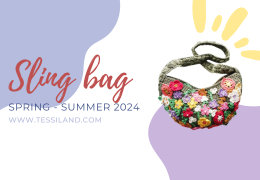
Crochet bags for spring summer 2024. 5 models of handmade sling bags.
Discover the latest trends for Spring/Summer 2024 with our exclusive guide to 5 crochet sling bag models. Perfect for...
Read more
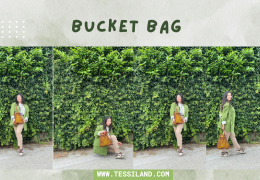
The Crochet Net Bucket Bag: A Trendy Accessory for 2024
Learn how to make a crochet net bucket bag with our simple and detailed tutorial. Use elastic cord, a size 5 crochet...
Read more
Crochet rugs, a passion that is becoming a trend.
In this article, dive into the art of crochet rugs and discover how to create unique and personalized pieces for your...
Read more
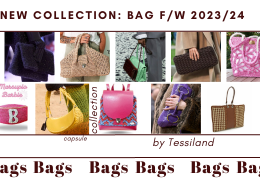
From runways to street style: the trendiest crochet bags.
Are you also passionate about handmade items and want to create your own capsule collection of crochet bags? Here are...
Read more

You never forget your first crochet piece (but which one to choose?)
Let’s be honest: if you’re thinking about diving into the fabulous world of fashion crochet, the temptation is always the same: “I’m making myself an oversized coat like the one I saw on Pinterest, maybe in orchid purple, which looks great with combat boots and matte lipstick.” No. Stop. Breathe. Put down the 12 mm hook. And listen to someone who’s been there. To start, you need a smart project. One that makes you feel wow, without shouting help.
The trick is: start in style, but keep it simple.
It’s not about settling, but about getting to know yourself through double crochets and chains. Crochet, like every new love story, needs chemistry, trials, adjustments. And a summer tank top is way more manageable than a red carpet dress. Here are 4 perfect projects to start creating your handmade wardrobe (with style, of course).
4 Projects to Start Your Handmade Wardrobe
Simple Tanks
You know those knitted crop tops trending on TikTok? The minimal, clean-cut ones that go with everything? Perfect. A panel tank lets you practice basic stitches and seaming, but without going crazy with shaping, necklines, sleeves, or weird forms.
Bonus: they work up fast and you can wear one with just jeans and a raffia hat.
How to Design a Simple Crochet Tank for Multiple Sizes (42–52)
We’ll work with rectangular panels (same front and back). No shaping. Just:
- correct width → based on starting chain count
- desired height → depending on the style: crop, regular, or long
Step 1: Take Measurements
To calculate the right base, you need two key measurements:
|Chest circumference| measure under the arms, around the fullest part of the bust | determines the tank’s width|
|Desired length| measure from shoulder to waist or hip | determines the panels’ height|
Example:
If you wear size 46 and have a bust circumference of 96 cm, you’ll need to create two panels, each 48 cm wide (48 + 48 = 96).
Step 2: Size Chart Reference
.png)
Step 3: Initial Chain Calculation
To calculate how many chains to start with, you must make a 10x10 cm swatch with your chosen yarn and hook.
Example:
You made a swatch with 4 mm hook and single crochet, getting: 18 stitches in 10 cm
So: 1 cm = 1.8 stitches
Now, if for size 46 you want a 48 cm wide panel:
48 x 1.8 = 86 starting chains
GENERAL FORMULA:
Starting chains = Desired panel width x stitches per cm
TIP: always add 2 extra chains for borders (or 3 if using double crochet).
Step 4: Panel Work
- Once you’ve calculated the width in chains:
- Work in single, double, or a fancy stitch of your choice.
- Continue until you reach the desired length (e.g. 50 cm).
- Make two identical panels (front and back).
- Want thin straps? Set them aside and make separately (e.g. 5–7 stitches per strap, adjustable length).
Step 5: Seams & Finishing
- Sew the sides, leaving an opening for the armholes.
- Sew the straps.
- Finish edges and neckline with a round of single or reverse single crochet.
Want a more summery version?
Choose a yarn like Frida (cotton blend) or ViscoIggy (cool and light) and use openwork stitches like mesh, shell, or granny stitch.
“Crochet Cosmo Cheat Sheet” Recap:
- Make a swatch: count how many stitches fit in 10 cm
- Calculate half of your bust circumference
- Multiply by stitches/cm: you get your starting chains
- Work two rectangles: then sew them together.
Summer Panel Tops
Colorful, breezy, Coachella vibes—even if you’re just on your balcony in Monza. Panel tops are easy to build: two rectangles sewn together, a few side finishes… and voilà, ready for aperitivo.
Pick a cotton yarn like Drake or Donnypattern and play with stripes or simple openwork to train without stress.
Summer Panel Top: Full Guide for Sizes 42–52
We’ll use a classic method:
- Two rectangular panels (front and back)
- Join with side and shoulder seams
- Finish edges with single crochet or drawstrings
- Optional: thin straps, bows, adjustable ties
Step 1 – Take Measurements
You’ll need two measurements:
- Bust circumference = around the fullest part of the chest
- Top length = from shoulder (or under clavicle) to where you want it to end (waist, belly button, hip)
We’ll use panel width = half the bust (since we’re working two panels).
Step 2 – Reference Size Chart
.png)
Step 3 – Starting Chain Calculation
Make a 10x10 cm swatch with your chosen yarn and recommended hook.
Example:
Stitch used: double crochet
Swatch: 10 cm = 16 stitches
So: 1 cm = 1.6 stitches
Now calculate chains for each size:
(Formula: Panel width x stitches per cm)
.png)
Always add: +2 chains for edges
If using open stitches (e.g. mesh, shell), consider the multiple (e.g. 3, 4, or 6) → round to the nearest multiple.
Step 4 – Top Construction
- Start with chains based on your size.
- Work in rows (not in the round) until you reach the desired height.
- Make two identical panels.
Join the panels:
- Sides: leave 18–22 cm open for sleeves (adjustable)
- Shoulders: sew 5–8 cm on each side (leave the center open for deeper neckline if desired)
- Finish edges and neckline with single crochet round
Cool Options:
- Add straps made of chains + single crochet
- Insert a waist drawstring for a gathered effect
- Play with color: stripes, gradients, yarns like Alicia, Diana, Jovy.
- alicia jovy diana
Vests with No Shaping
The vest is the chic version of “I’m practicing but no one needs to know.” Just make three panels: one for the back, two for the front. No sleeves, no shaping, no panic.
Perfect with a white shirt or a light dress. You’ll already feel like a crochet queen.
VEST WITHOUT SHAPING – Guide for Sizes 42/44/46/48/50/52
STRUCTURE
The basic vest is made of 3 rectangular panels:
• 1 back panel
• 2 front panels (one right and one left)
• No shaping, just side and shoulder seams.
REFERENCE MEASUREMENTS (in cm)
.png)
CHAIN CALCULATION: how to do it?
Key steps:
- Make a 10×10 cm swatch with the chosen yarn and hook
- Count how many stitches you have in 10 cm
- Calculate how many chains are needed to reach the panel width
PRACTICAL EXAMPLE
You made a swatch with double crochet using a 4.5 mm hook and medium-weight yarn like Donny, resulting in:
10 cm = 16 stitches
1 cm = 1.6 stitches
FORMULA:
Chains = Panel width (cm) × stitches per cm
CHAINS PER PANEL (with 1.6 st/cm)
BACK PANEL:
.png)
FRONT PANELS (each):
.png)
Always add +2 chains for borders (or +3 if working in double crochet)
VEST CONSTRUCTION – STEP BY STEP
- Create the back panel → work until desired length
- Create the two front panels; leave straight or create a deeper neckline (explained below)
- Join panels with single crochet seam or wool needle:
- Shoulders: 7–10 cm each side
- Sides: leave 18–22 cm open from top for armholes
STYLE VARIATIONS
You can create a V-neck by starting front panels at same height as back, then decreasing 1 stitch every 2 rows on inner side
• Finish edge with crab stitch or picot
• Add a button or central bow
• Use light yarns like Frida, Nirvana, Donnypattern for summer looks, or Chuck for chunkier vests
QUICK SUMMARY FOR SIZE 46 (double crochet example)
• Back panel: 48 cm × 1.6 = 77 chains + 3
• Front panels (×2): 24 cm × 1.6 = 39 chains + 3
• Total length: 54 cm
OVERSIZED SWEATER WITH RECTANGLES
The “Netflix and crochet” project. Two large rectangles sewn together with side slits and soft neckline: a comfy-chic sweater to wear while playfully saying, "I made this, yes. It took me a weekend. Just to relax."
Pro tip (a lifesaver):
Before you begin, choose a clear, well-explained pattern, ideally with step-by-step photos or video. Don’t be tempted by vague tutorials like “chain 45 and follow your intuition.” Intuition is great, but only after your third project.
The side effect?
When you finish your first garment, something strange happens: you start looking at your clothes with a critical eye. “This sweater… I could make it again, better.” Then you realize: it’s not just crochet. It’s empowerment. It’s fashion. It’s art with your hands. And spoiler: it changes everything.
OVERSIZED RECTANGLE SWEATER – Full guide
STRUCTURE
The sweater consists of:
• 2 identical rectangles (front and back)
• Sewn side seams (with armhole openings)
• Shoulder seams (leaving the neckline open)
• Optional: edge finishing on sleeves, hem, and neckline
SIZE MEASUREMENTS – relaxed fit
An oversized fit requires adding 10–15 cm per side beyond bust circumference.
.png)
HOW TO CALCULATE CHAINS
- Make a 10×10 cm swatch with your stitch and yarn
- Count stitches in 10 cm → e.g., 10 cm = 16 stitches → 1 cm = 1.6 stitches
- Multiply panel width by stitches/cm
- Add 2 or 3 chains for border and turning chains
EXAMPLE (with double crochet, 1.6 st/cm):
.png)
If using open or repeat-pattern stitches (e.g., granny, zigzag) ➜ round to the correct multiple.
CONSTRUCTION – STEP BY STEP
- Work two identical rectangles. Panel width as above. Length: 55–65 cm, depending on size and style
- Side seams Leave armhole opening: 18–22 cm from top
- Shoulder seams Sew 8–10 cm each side, leaving neckline center open
- Finishing touches (optional) Sleeve edges in single crochet or crab stitch
- Bottom edge in rib or elastic stitch
- Neckline in V or boat? You decide by adjusting center spacing
STYLE & VARIATIONS
Ideal stitches: double crochet, rectangular granny, mesh, grid stitch
WOW effects: wide stripes, contrast edging, decorative buttons, side slits
SUMMARY FOR SIZE 46
• Bust circumference: 96 cm → oversized at 116 cm
• Panel width: 58 cm
• Stitches/cm: 1.6 (from swatch)
• Starting chains: 58 × 1.6 = 93 + 3 = 96 chains
• Length: around 58 cm
10 Lifesaving Tips.
.png)
1. Always start with a swatch.
Always. Yes, even if you're in a rush. Even if “it’s oversized anyway.” A 10×10 cm swatch helps avoid:
- stitches too loose (beach dress effect... unintentionally)
- stitches too tight (cropped Barbie sweater)
Pro tip: block, steam-press, and then measure the swatch. Never before!
2. Choose stitches that are easy to count
Avoid overly “holey” or elaborate stitches, at least for your first attempt. Ideal:
- Double crochet (for smooth, neat finish)
- Striped granny stitch
- Grid stitch (simple mesh, multiple of 3)
- Seed stitch in crochet
They simplify counting rows and seams!
3. A trick to avoid seam mistakes
- Clip the panels together before sewing.
- Then try on in front of a mirror: adjust shoulders, neckline, length before permanent seaming.
4. Take notes like a designer
- Yarn used + quantity
- Hook size
- Stitch pattern
- Number of chains and rows
- Keep it in a project notebook (or a dedicated blog/Instagram post). It helps for future garments, advising others, and… not reinventing the wheel every time.
5. Oversized ≠ sloppy
Add smart details:
- Contrast edging
- Side slits
- Applied sleeves or simple cuffs
- A statement button on the shoulder
It makes your piece stand out, like it’s from a French fashion lab
6. Wash your garment before wearing
Many yarns (even quality ones) soften or stabilize after the first wash.
Always follow washing instructions on the label (or test on a swatch).
7. Color creates the design
Simple sweater? Make it “wow” with:
- Color blocks (e.g., cream top, coral bottom)
- Asymmetrical stripes
- Solid with gradient yarn (e.g., Taylor or Nirvana)
- Lurex edging or silk-effect
8. “Not perfect” is better than “never started”
- Don’t wait until you’re ready to make a perfect sweater. Start, fail, laugh, undo, repeat.
- Each piece is a lesson and every extra stitch is another superpower
9. Shopping bonus
Always keep an extra skein. Don’t trust calculations blindly: stitch count changes, tension evolves, life changes (like wanting to add sleeves last-minute).
That extra ball can save your project.
10. The twist: gift it to yourself
Create your first oversized sweater thinking of yourself as the muse.
Choose your best color, the stitch that relaxes you, and wear it proudly: you made it. And that’s no small thing.
It’s time to get to work and create your own crochet capsule.
Rosaria Tessiland®
.jpg)




Leave a comment