Carrello della spesa
0 prodotti
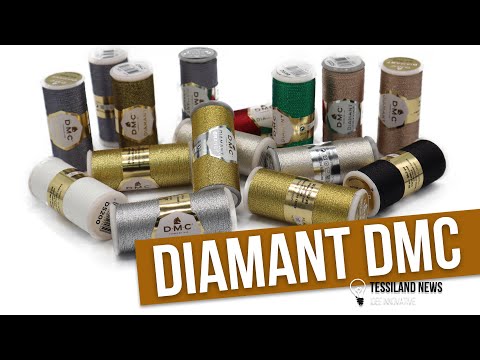
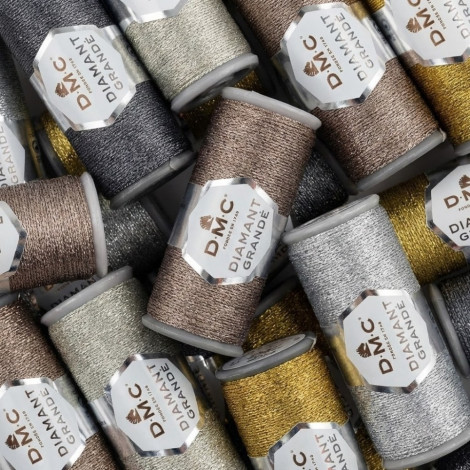
DMC Diamant Grandè metallic thread, 72% viscose and 28% polyester, indivisible 6-ply structure, 20-meter spool. Ideal for hand embroidery, cross stitch on Aida 11-14, tatting and crochet jewellery. Recommended crochet hook 1.00, Tapestry needle 22-24.
.png)
First quality products
.png)
Free shipping on orders starting from €19 in ITALY
.png)
You may return the product within 30 days.
QUICK SPECS: Composition: 72% Viscose, 28% Metallic Polyester | Length: 20m | Structure: indivisible 6-ply | Recommended crochet hook: 1.00 | Recommended needle: Tapestry 22-24 | Washing: hand wash, lukewarm water
The DMC Diamant Grandè Thread is a 20-meter metallic thread designed for those looking for visible shine and instant coverage in hand embroidery and cross stitch. Unlike standard Diamant, Grandè has a thicker size that lets you create luminous details with a “jewel-like” effect without layering multiple strands or passes. It is also perfect for tatting, crochet jewellery and macramé, where you need a thread that can handle tension and deliver metallic presence without compromise.
With an indivisible 6-ply twisted structure (72% viscose and 28% metallic polyester composition), Diamant Grandè offers a rare balance of softness and reflection: the viscose base ensures smooth glide, while the metallic coating delivers an even luminous effect. It works well on Aida 11-14, linens worked over 2, and fabrics for surface embroidery, where the needle eye is suitable and friction stays under control. On Tessiland, you will find every colour with the dye lot number shown directly on the product page: valuable information for keeping large projects consistent or planning future purchases. If the lot you need is no longer available, our team is ready to help find alternative solutions or compatible lots: no bots, just people who truly know yarns and threads.
Metallic threads should be evaluated based on construction, glide and resistance to real friction. Diamant Grandè is designed to deliver instant impact with a single thread, reducing the trade-off between brilliance and ease of use. Here is what makes this thread different and how to get the best from it in your creations.
Diamant Grandè has a 6-ply structure twisted into one cohesive thread, and it is not divisible. This means you do not have to spend time separating and realigning strands as you would with other metallic threads or traditional mouliné floss.
Practical advantages for you:
If you want a metallic thread that delivers visual impact without layering multiple passes, Grandè’s structure is designed exactly for that.
The combination of 72% viscose and 28% metallic polyester (some specific colours may be 100% polyester) offers a balance of flexibility and reflection. The viscose contributes to a soft hand and smoother movement through the needle eye, while the metallic polyester ensures lasting shine and surface durability.
What changes compared with thin-film metallics:
The hybrid composition makes Grandè easier to handle than many pure metallics, while still maintaining the luminous effect you want.
Every metallic thread suffers from friction: more passes through a narrow needle eye or dense fabric mean coating wear and reduced reflection. Grandè is built to reduce this issue, but only if you follow a few basic rules.
Where the thread performs well:
Where it is better to avoid it:
Choosing the right Tapestry 22-24 needle with a suitable eye and a compatible fabric helps preserve shine and continuity throughout the whole project.
Diamant Grandè is around twice as thick as standard Diamant, and its coverage is comparable to several strands of cotton mouliné. In practice, this gives you a real advantage: you get visible dimension with a single thread, reducing the number of passes needed to fill or decorate.
Applications where coverage makes the difference:
If you work on projects where time and visual impact matter, Grandè’s coverage helps you save effort without compromising the final result.
Metallic threads build up twist during use: if you do not release it regularly, knots, tangles and little “balls” increase and slow your work down. Also, the thread end can open up when cut: this is normal with a softer twist, but it needs to be managed.
How to reduce twist and knots:
How to manage a fraying thread end:
These simple precautions help you work more smoothly and preserve the quality of the thread until the very end of the spool.
The shine of metallic thread lasts longer when you avoid mechanical rubbing and harsh detergents. Even though the thread is stable, it is wise to treat it like a delicate finish.
← Scroll to see more tutorials →
For more tutorials, to substitute a thread or calculate the yardage for your next creation,
✨ Open Tessiland StudioWhat is the difference between Diamant and Diamant Grandè?
The standard Diamant is finer and better suited to delicate details and tightly woven fabrics. Grandè is thicker, gives more coverage, and creates a fuller, more dimensional effect with a single thread. If you are working on Aida 18, it generally makes more sense to stay with standard Diamant to reduce friction and preserve the fabric.
Is Diamant Grandè divisible like mouliné floss?
No. It is an indivisible thread: the 6-ply structure is twisted into one cohesive strand. Separating it weakens the thread and worsens the reflective effect. If you need a divisible metallic, consider other thread types.
Can I use Grandè on Aida 18?
It is not recommended. Small holes increase friction: you may distort the fabric and wear down the metallic finish. On Aida 11-14, it performs better and stitches more cleanly, preserving both the thread and the fabric.
Why do knots or little “balls” form while stitching?
Usually for two reasons: the length is too long and twist has built up. Cut 40-50 cm lengths and let the needle and thread hang every few stitches to release the twist. This simple habit dramatically reduces knots and tangles.
The end opens up when I cut the thread: how do I thread the needle?
Finish the end with a tiny drop of clear nail polish or fabric glue and let it dry. Alternatively, use a flat-wire needle threader and trim away the already frayed part if it has worn too much.
Which needle is best for cross stitch with Diamant Grandè?
A Tapestry 22-24 with a comfortable eye. The goal is to reduce friction: too narrow an eye = faster wear on the metallic finish and a higher risk of dulling the surface. The eye should pass cleanly through the fabric hole.
Can I use Diamant Grandè for tatting and earrings?
Yes, especially for jewellery: it handles knot tension well and gives a clearly metallic look. If you want more shape retention, some colours (depending on the composition) may feel stiffer, which can be useful for structured motifs.
Can an item embroidered with Diamant Grandè be machine washed?
It is better to avoid it: the metallic section suffers from mechanical action and rubbing against other garments. Choose gentle hand washing and flat drying to preserve shine and the integrity of the embroidery.
How much thread is needed for a medium cross stitch project?
It depends on stitch density and fabric. With Grandè, thanks to the thicker size, you use less than with standard Diamant to achieve the same coverage. For accurate calculations, check the video tutorials attached to the product page on Tessiland, where you will find practical consumption examples.
Does the thread lose its shine while working?
If you use long lengths, narrow needle eyes or fabric that is too dense, friction can dull the metallic coating. With short lengths (40-50 cm), a suitable needle and regular twist release, the shine stays good throughout the whole spool.
Can I dye or alter the colour of Diamant Grandè?
No. The metallic surface does not absorb dye like cotton or natural wool would. The thread colour is the one you see on the spool: if you are looking for specific shades, check availability within the DMC range.
How can I tell whether the dye lot matches a previous purchase?
Tessiland is the only e-commerce store that shows the dye lot number directly on the product page. If the lot you need is no longer available, contact our team: we look for alternative solutions or compatible lots with no bots involved, only people who truly know yarns and threads.