Carrello della spesa
0 prodotti
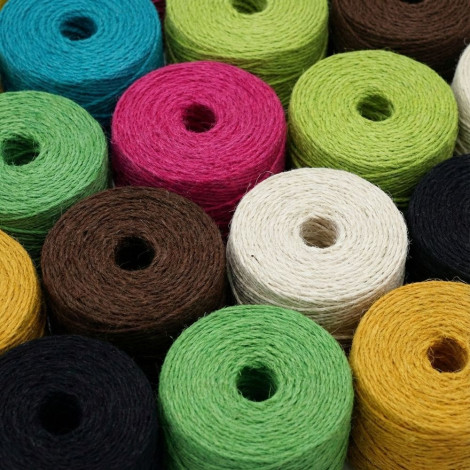
180g cone of natural jute with a length of 200 meters, perfect for making handmade bags, baskets and accessories. Eco-friendly plant fiber, softened and versatile, recommended crochet hook 4-6.
.png)
First quality products
.png)
Free shipping on orders starting from €19 in ITALY
.png)
You may return the product within 30 days.
QUICK SPECS: Composition: 100% Natural Jute | Cone weight: 180g | Length: 200m | Recommended crochet hook: 4-6 | Origin: Plant fiber from eco-sustainable farming | Features: Softened coarse fiber, highly hygroscopic
Natural jute on a 180-gram cone is the perfect yarn for anyone who wants to create handmade bags, baskets, rugs and accessories with an authentic, sustainable feel. Tessiland selects this natural plant fiber from eco-sustainable farming, offering a versatile material that combines strength and workability—ideal for crochet projects with a rustic, natural touch.
Derived from the stem of plants in the Corchorus genus, jute is a textile fiber with ancient roots, valued for its toughness and distinctive look. Tessiland’s yarn undergoes a gentle softening treatment that improves handling without changing its signature rustic appearance. With 200 meters of length, this 180g cone lets you make a wide range of creative projects: from classic beach bags to storage baskets, from handmade belts to decorative rugs, up to home décor accents with a natural vibe. Jute can be worked on its own or paired with other yarns to create original effects and interesting textures. Tessiland ensures sourcing from eco-sustainable production with very low-impact dyes, for those who consciously choose materials that respect the environment. The natural color, with no added dye, preserves the fiber’s authentic shades—from ivory white to pale yellow and warm brown.
Natural jute by Tessiland is an excellent choice for creative projects that require strength, natural appeal, and sustainability. Let’s take a closer look at the technical features of this unique plant-based yarn.
Jute is a natural textile fiber extracted from the stem of plants in the Corchorus genus, part of the Malvaceae family. As with flax and hemp, the raw material is obtained from the plant stem, which can reach up to 4 meters in height.
Jute fibers are naturally coarse and tough, with color ranging from ivory white to pale yellow and brown, depending on maturity and the extraction process. Tessiland carefully selects producers that guarantee eco-sustainable use of the fiber, sourced from controlled farming within a balanced ecosystem—never from uncontrolled deforestation.
Jute is highly hygroscopic, meaning it can absorb and release moisture from the surrounding environment. This natural property contributes to its typical scent and requires special care when storing and maintaining finished items.
Raw jute has a naturally coarse texture that may be harder to work with for more delicate projects. For this reason, Tessiland’s yarn undergoes a gentle softening treatment that significantly improves handling without compromising its distinctive rustic look.
This process results in a yarn that is more crochet-friendly, reducing friction during stitching and helping to limit hand fatigue. The treatment still preserves the fiber’s typical toughness and strength, keeping its visual identity intact.
The 180g / 200m cone offers excellent yield and allows you to complete medium-sized projects with a single ball. A crochet hook size 4-6 is recommended, depending on the desired tension and stitch pattern. Jute can be worked on its own or combined with other yarns (cotton, linen, synthetic raffia) to create original texture effects and interesting color combinations.
Natural jute by Tessiland is the perfect yarn for a wide range of handmade creations that need structure, durability, and a natural aesthetic:
The natural, undyed color is easy to personalize with applied decorations, embroidery using colored yarns, or pairings with contrasting materials such as white or colored cotton.
The natural color of Tessiland jute is the authentic shade of the plant fiber, with no added artificial dyes. Tones naturally range from ivory white to pale yellow and warm brown, creating a slightly variegated look that adds character and authenticity to finished pieces.
Due to the product’s raw nature, it is normal for small plant impurities to shed during work: tiny bark residues, short fibers or natural dust may come off the yarn. These characteristics settle gradually after the first washes and uses.
In the case of dyed jute (available in other colors in the Tessiland range), a slight color release may occur during the first washes, because the porous nature of the fiber does not allow intensive fixing treatments like traditional yarns. This should be considered when planning projects that combine dyed jute with highly contrasting materials—ideally avoiding direct pairing of dark jute with delicate light fabrics.
Choosing Tessiland natural jute means making a conscious choice toward environmental sustainability. Jute is a renewable resource that grows quickly (the plant reaches maturity in 4-6 months) and requires little water and no pesticides to cultivate.
Tessiland has selected certified producers that guarantee:
Jute is also fully biodegradable and compostable at end of life, returning to the earth without leaving polluting residues. Its natural durability allows you to make long-lasting items that don’t need frequent replacement, reducing overall resource consumption. Choosing jute projects means actively helping reduce plastic and synthetic materials in everyday life.
Jute care requires a few specific precautions to preserve the beauty and durability of finished pieces. As a highly hygroscopic natural material, jute retains moisture and may develop its characteristic scent if not properly cared for. Dyed jute creations require extra attention due to possible color release.
← Scroll to see more videos →
For more tutorials, to replace a yarn, to calculate the yarn usage for your next creation, try the
✨ TESSILAND STUDIOData sheet
How many meters of jute are on a 180g cone?
The 180-gram Tessiland natural jute cone contains 200 meters of yarn. This generous yardage allows you to complete medium-sized projects such as bags, baskets or small rugs with a single cone, ensuring color continuity and no joins.
What crochet hook size should I use for jute?
For Tessiland natural jute, a crochet hook size 4-6 is recommended. The choice depends on the finish you want: a 4-4.5 hook creates a tighter, more structured fabric—ideal for bags and containers that need to hold their shape; a 5.5-6 hook produces a more open, softer texture, perfect for decorative rugs or casual accessories.
Is Tessiland jute hard to work with?
Tessiland jute undergoes a gentle softening treatment that makes it much easier to handle than raw fiber. While it keeps its signature slightly coarse texture, it is more crochet-friendly and less tiring on the hands. It’s suitable even if you’re new to this type of plant fiber, though it’s best to maintain consistent tension while working.
Is it normal for jute to shed impurities while working?
Yes, it’s completely normal for jute to release small plant impurities such as bark residues, short fibers or natural dust during work. This is due to the material’s raw, plant-based nature. The impurities decrease progressively with use and tend to settle after the first washes.
Can I machine-wash jute creations?
Machine washing is strongly discouraged for jute creations. The plant fiber can be damaged by the drum’s mechanical action and by higher temperatures. It’s always best to hand wash gently in cold or barely lukewarm water, with a short soak (maximum 5 minutes) and natural detergents.
Does jute lose color after washing?
Natural, undyed jute does not lose color and keeps its authentic shade. In the case of dyed jute (available in other color options), a slight color release during the first washes may occur, because the porous nature of the fiber does not allow intensive fixing treatments. For this reason, it’s always recommended to wash jute separately and to be careful when combining highly contrasting colors in the same project.
Can I combine jute with other yarns?
Absolutely! Jute can be worked together with other yarns to create original texture effects and interesting visual contrasts. It pairs especially well with cotton, linen, synthetic raffia or metallic yarns. You can hold both yarns together (double-stranding), or alternate sections of pure jute with sections in other materials to create decorative patterns.
Why does jute have a distinctive smell?
Jute’s characteristic scent is due to its highly hygroscopic nature: the plant fiber naturally absorbs and retains moisture from the surrounding environment. This is normal and reduces significantly with airing and washing. To minimize the scent, store jute creations in dry, well-ventilated places and wash periodically following the care instructions.
Is Tessiland jute eco-friendly and sustainable?
Yes. Tessiland jute comes exclusively from certified eco-sustainable farming, never from uncontrolled deforestation. Jute is a renewable resource that grows quickly, requires little water and no pesticides. The dyes used for colored variants have a very low environmental impact. In addition, jute is fully biodegradable and compostable, returning to the earth without polluting.
What can I make with 200 meters of jute?
With a 200-meter jute cone you can create many projects: a medium-sized beach bag, 2-3 storage baskets (20-25cm diameter), a round rug of about 50cm diameter, 3-4 trivets, several belts or bracelets, or a set of place cards and home decorations. The actual amount needed depends on the stitch pattern and your working tension.
How can I soften jute further if it still feels rough?
If you want an even softer feel, you can do a pre-wash of the ball before working: soak it for 5 minutes in lukewarm water with a tablespoon of gentle fabric softener, then rinse and let it dry completely. Alternatively, after finishing your project, a wash with softener will make the item more pleasant to the touch while preserving jute’s characteristic natural texture.
Can I dye natural jute myself?
Yes, natural jute can be dyed with dyes suitable for plant fibers, either before or after working. You can use natural dyes (from fruit, vegetables, tea or coffee) for gentle, eco-friendly results, or chemical dyes for cellulosic fibers. Keep in mind that jute’s porous nature absorbs color well but may release a little during the first washes, so a final fixative treatment with vinegar or salt is recommended.