Carrello della spesa
0 prodotti
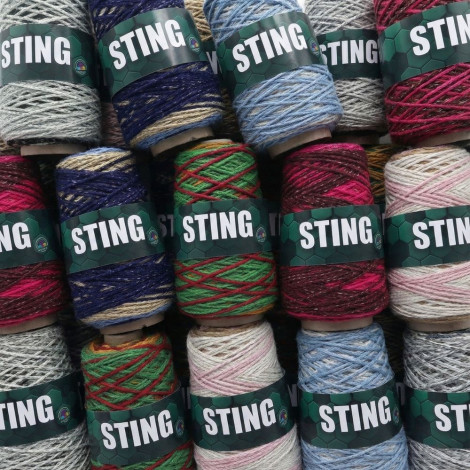
Long-gradient yarn made of 22% Wool, 4% Nylon and 74% Acrylic, in a 150 gram cone for 450 meters. Recommended needles 8-10 or crochet hook 7-9 for voluminous, high-impact projects.
.png)
First quality products
.png)
Free shipping on orders starting from €19 in ITALY
.png)
You may return the product within 30 days.
QUICK SPECS: Composition: 22% Wool, 4% Nylon, 74% Acrylic | Weight: 150g | Length: 450m | Recommended needles: 8-10 | Recommended crochet hook: 7-9 | Type: Long-gradient | Format: Cone
Sting is a long-gradient yarn that combines practicality, durability and softness thanks to its blended composition of wool, nylon and acrylic. Perfect for creative knitting and crochet projects, this 150 gram cone yarn offers an excellent yield of 450 meters, making it ideal for scarves, accessories and garments. Available on Tessiland with full transparency on the dye lot number to ensure color consistency with every purchase.
The combination of 22% wool, 4% nylon and 74% acrylic makes Sting a versatile, high-performing yarn: wool provides natural warmth and breathability, nylon ensures resistance to wear and friction, while acrylic guarantees durability, easy care and lasting softness over time. Its long-gradient structure creates delicate, progressive color transitions that enhance any stitch pattern without the need to change yarn balls frequently. With needles 8-10 or crochet hook 7-9, this yarn is ideal for voluminous, textured, eye-catching creations: from soft, cozy scarves to sturdy bags, from decorative cushions to oversized sweaters. The 150g cone format makes it especially suitable for medium and large projects, optimizing value for money and reducing knots while working. Tessiland offers exclusive transparency on the color lot directly on the product page, allowing you to plan your purchases with confidence and contact customer service if you need to add more from the same lot.
They do not open up while working! They are perfect for getting started! Let’s discover more:
Sting gradient wool blend stands out for its technical features, making it ideal for creative and functional projects. Let’s take a closer look at the composition, performance, color effects and possible uses to help you make the most of this versatile yarn.
Sting’s three-fiber composition is designed to balance natural qualities with synthetic performance. The 22% wool provides natural thermoregulation, breathability and a pleasant softness to the touch, ensuring comfort even in projects worn directly against the skin. The 4% nylon plays an essential structural role: it reinforces the yarn, increases abrasion resistance and helps prevent early wear, especially important for accessories subject to mechanical stress such as bags and baskets. The 74% acrylic forms the yarn’s base, ensuring durability, dimensional stability, easy care and resistance to the elements.
This combination offers many practical advantages:
The result is a yarn that combines the natural look and comfort of wool with the practicality and durability of synthetic fibers, perfect for anyone looking for a high-performing product without giving up a pleasant hand feel.
Sting’s distinctive feature is its long-gradient effect, a dyeing technique that creates gradual, harmonious transitions between different color tones. Unlike short-gradient yarns, which change quickly and create more variegated, irregular effects, Sting’s long color sections produce broad, delicate transitions, ideal for enhancing simple stitches and textured patterns without creating visual clutter.
The benefits of the long-gradient effect include:
Thanks to Tessiland, you have the guarantee of transparency on the dye lot number directly visible on the product page. This allows you to buy multiple quantities from the same lot for large projects, ensuring perfect consistency in the gradient effect. If a lot is sold out, Tessiland’s customer service with real people is available to help you find alternative solutions or check future availability.
Sting in a 150 gram cone offers 450 meters of yarn, providing an excellent yield of 3 meters per gram. This generous meterage makes it especially cost-effective for medium and large projects, optimizing your investment without compromising the quality of the final result.
The cone format offers clear advantages:
With 450 meters available, a single cone can make roomy scarves, cozy cowls, medium-sized shawls or accessories such as bags and baskets. For garments such as sweaters or cardigans, you will need to plan for multiple cones: the dye lot transparency offered by Tessiland allows you to calculate the required amount precisely and purchase all the material from the same lot, avoiding color differences between cones.
Sting offers competitive value for money: its blend of fibers, generous meterage and cone format make it a smart choice for hobbyists and professionals looking for a reliable yarn without excessive cost.
Sting is suitable for many techniques both in knitting and crochet, thanks to its medium-bulky thickness and balanced structure. The recommended needle sizes range from 8 to 10, while crochet hook sizes 7 to 9 are recommended for crochet. This flexibility allows you to adapt the tension and density of the fabric to the specific needs of your project.
Techniques that work especially well with Sting:
The choice of needle or hook size affects the final result: smaller sizes create denser, more structured fabrics, ideal for bags and accessories that need stability, while larger sizes produce airy, drapey fabrics, perfect for shawls and soft garments. We recommend making a swatch to check gauge and visual effect before starting the final project.
The versatility of Sting gradient wool blend makes it suitable for a wide range of creations, from garments to personal accessories and home décor. The combination of durability, softness and gradient color effect opens up interesting creative possibilities for hobbyists and professionals alike.
Projects for garments and wearable accessories:
Projects for accessories and décor:
The gradient effect is especially suited to creations that emphasize color continuity: avoid overly elaborate or multicolor stitch patterns that could break up the harmony of the transitions. Linear stitches, regular textures and projects worked in a single direction best enhance Sting’s aesthetic qualities.
Caring for handmade pieces made with Sting gradient wool blend is simple and practical, thanks to the synthetic content that makes maintenance easier compared to pure wool. Follow these tips to preserve softness, shape and color vibrancy over time.
← Scroll to see more tutorials →
For more tutorials, to replace a yarn or calculate the yarn needed for your next creation,
✨ Open Tessiland StudioHow many Sting cones do I need to make a women’s size M sweater?
For a women’s size M long-sleeved sweater in garter stitch or stockinette, estimate approximately 4-5 cones of 150g, for a total of about 600-750 grams and 1800-2250 meters. The exact quantity depends on the fit (close-fitting or oversized), the desired length and your personal gauge. We recommend making a 10x10 cm swatch with your chosen needles, calculating how many grams you used and multiplying that by the total surface area of the garment. Thanks to the dye lot transparency offered by Tessiland, you can purchase all the cones you need from the same lot to guarantee color consistency.
Is Sting wool blend suitable for baby and small children’s projects?
Yes, Sting can be used for some projects intended for little ones, such as baby blankets, decorative cushions, storage baskets or nursery accessories. For garments worn directly against the skin of babies and very young children, always check individual sensitivity: the acrylic content is generally well tolerated and easy to wash frequently, which is important for children’s items. For particularly sensitive skin, choose 100% natural yarns certified for pediatric use.
How can I achieve an even gradient effect when working in the round?
When working in the round (for example for hats or tubular cowls), Sting’s gradient effect will develop in a spiral rather than in regular horizontal bands. To achieve more even transitions, you can use the back-and-forth method with seamed finishing, which keeps the gradient lines horizontal and parallel. Alternatively, embrace the spiral effect as an aesthetic feature of circular work: many projects gain charm precisely from this visual characteristic. Always make a swatch first to evaluate the result before proceeding with the full project.
Can I dye or alter Sting’s colors after purchase?
Dyeing blended yarns containing acrylic presents significant technical challenges: acrylic does not absorb traditional dyes for natural fibers and requires industrial high-temperature processes that cannot be replicated at home. Altering Sting’s color may produce uneven or unsatisfactory results, with the risk of damaging the yarn structure. We recommend choosing the colorway that best suits your creative needs from the start, taking advantage of the built-in gradient shades already present in the yarn.
Does Sting tend to pill with wear and washing?
The presence of 4% nylon in Sting’s composition helps reduce pilling compared to pure wool yarns or lower-quality acrylics. However, as with all blended yarns, some fuzzing may appear in areas subject to greater friction (underarms, inside the neck, areas that rub against bags and belts). To minimize this: avoid overly aggressive washing, use delicate cycles, dry flat whenever possible and remove any pills with a fabric shaver or suitable lint remover. The quality of the finished work (even tension, regular stitches) also positively affects resistance to pilling.
What is the difference between working Sting with size 8 needles and size 10 needles?
The needle size significantly influences the final result. Size 8 needles produce a more compact, structured and warmer fabric with better stitch definition: ideal for accessories that require stability (bags, baskets) or garments that need to hold their shape. Size 10 needles create a more open, softer and drapier fabric with lower yarn consumption: perfect for shawls, lightweight scarves and oversized garments with a voluminous look. We recommend making swatches with both sizes to compare drape, warmth and material consumption before choosing the most suitable option for your project.
Can I combine Sting with other yarns to create two-tone or multicolor effects?
Yes, Sting works well in creative combinations with other yarns of compatible thickness. You can hold it double with a thin solid-color yarn to soften the gradient effect and add body, or alternate it in stripes with contrasting yarns to create geometric patterns. Make sure the paired yarns have compatible care instructions to simplify maintenance of the finished item. Always check the resulting gauge with a swatch: yarns with different fiber compositions can behave differently after washing, causing distortion. The safest pairing is with yarns that have similar percentages of natural and synthetic fibers.
Is Sting suitable for amigurumi and stuffed toys?
Yes, Sting can be used for medium to large amigurumi and stuffed toys, thanks to the durability provided by nylon and the structure given by acrylic. Use a size 7 crochet hook for a compact fabric that will not show the stuffing through the stitches. The gradient color effect will add originality to your creations, giving toys an artistic and contemporary look. Keep in mind, however, that Sting’s medium-bulky thickness is better suited to generously sized projects: for mini amigurumi or fine details, thinner yarns are a better choice for greater precision.
How should I store unused Sting cones?
Store Sting cones in a cool, dry place away from direct light to preserve color vibrancy and fiber integrity. You can keep them in cardboard boxes, breathable fabric bags or plastic containers with air holes, avoiding completely sealed bags that could trap moisture. Although the synthetic content makes Sting less vulnerable to moths than pure wool, it is still advisable to use natural protectors (lavender, cedar) if you plan to store the yarn for long periods. Keep the cones away from direct heat sources and environments with significant temperature fluctuations.
Does Sting shrink or lose shape after the first wash?
Thanks to its high percentage of acrylic (74%), Sting offers excellent dimensional stability and a minimal tendency to shrink compared to pure wool yarns. However, to maximize stability, it is advisable to do the first wash by hand in lukewarm water, which helps the fibers settle gradually. After this initial treatment, you can proceed with machine washing at 40°C following the care instructions. For garments that require precise finished measurements (pattern-based sweaters, structured accessories), consider washing your gauge swatch and measuring it after drying to calculate any changes and adjust stitch count and needle size accordingly.
What is the advantage of buying Sting from Tessiland instead of other e-commerce stores?
Tessiland is the only e-commerce store that shows the dye lot/batch number directly on the product page, allowing you to check availability in real time and buy multiple quantities from the same lot to guarantee perfect color consistency. This transparency is essential for gradient yarns like Sting, where even small differences between lots could create visible discontinuities in the finished project. In addition, Tessiland’s customer service with real people (not automated chatbots) is available to assist you if lots are sold out, helping you find alternative solutions or reserve future availability. Its competitive value for money completes an offer designed to meet the needs of hobbyists and professionals alike.
Can I use Sting for summer projects or is it too warm?
Sting contains 22% wool, a thermoregulating fiber that provides moderate warmth, so it is better suited to autumn, winter and spring projects. For lightweight summer accessories such as bags, storage baskets or home décor, Sting can still be used thanks to the acrylic content, which does not weigh projects down excessively. For summer garments worn against the skin, cotton, linen or viscose yarns are a better choice for freshness and breathability. If you want to enjoy the gradient effect in summer too, choose accessory projects or lightweight pieces to wear on cool evenings.