Carrello della spesa
0 prodotti
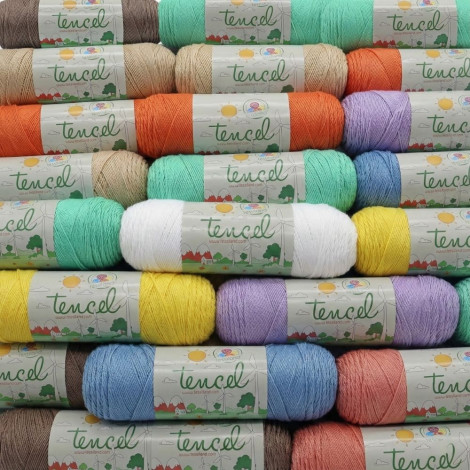
Eco-friendly yarn ball made from 100% Lyocell Tencel® wood fibre, 200 grams for 450 metres, with an exceptional yield of 2.25 metres per gram. Soft, breathable and sustainable—ideal for spring and summer garments. Recommended needles 4-5 or crochet hook 3-4.
.png)
First quality products
.png)
Free shipping on orders starting from €19 in ITALY
.png)
You may return the product within 30 days.
QUICK SPECS: Composition: 100% Lyocell (Tencel®) | Weight: 200g | Length: 450m | Yield: 2,25 m/g | Recommended needles: 4-5 | Recommended crochet hook: 3-4 | Production: Sustainable closed-loop process | Features: Biodegradable, breathable, silky
Pure Tencel Lyocell represents the new frontier of sustainability in the world of yarns. This 200-gram, 450-metre yarn ball is made from 100% certified wood fibre, offering a unique blend of softness, breathability and respect for the environment. Tessiland offers this innovative yarn for anyone who wants to create handmade projects with next-generation materials, without compromising between quality and ethics.
Lyocell Tencel® stands out for its closed-loop manufacturing process, which recycles 99% of the solvents used, drastically reducing environmental impact compared to traditional yarns. This yarn ball delivers an exceptional yield of 2.25 metres per gram, ensuring outstanding value for your makes. The fibre, sourced from eucalyptus and beech trees grown in responsibly managed forests, becomes a silky yarn with a natural sheen reminiscent of silk, yet with superior strength and durability. Perfect for next-to-skin pieces such as tops, lightweight cardigans, summer shawls and elegant accessories, Tencel keeps its shape over time without losing form. Its molecular structure enables natural thermoregulation, absorbing up to 50% more moisture than cotton and releasing it quickly into the air for optimal comfort in every season. Tessiland always shows the dye lot/batch number directly on the product page, giving you the transparency you need to purchase enough yarn from the same colour bath. If your lot runs out, our team is always available to help with tailored solutions.
Pure Tencel Lyocell is a game-changing innovation in eco-friendly yarns. This plant-based fibre combines superior technical performance with a reduced environmental footprint, offering unique qualities that make it ideal for high-quality handmade projects. Let’s take a closer look at the properties that make this yarn ball an excellent choice for crochet and knitting.
Tencel Lyocell stands out for a set of exceptional technical properties that make it unique among natural yarns. The fibre has a smooth, uniform surface at a microscopic level, resulting in a silky hand feel and a natural sheen comparable to silk. This gives finished pieces a particularly elegant, refined look.
In terms of mechanical strength, Lyocell outperforms many traditional natural fibres. It retains up to 85% of its strength even when wet, unlike cotton which loses around 30% in damp conditions. This makes it ideal for items that need frequent washing, such as summer tops, tees and home accessories.
The 2.25 metres per gram yield offered by this 200g yarn ball ensures excellent value, allowing you to create even complex projects with a reasonable investment. The yarn has a well-balanced twist that makes it easy to work with both crochet and needles, gliding smoothly without kinking, twisting or forming knots.
Working with Tencel Lyocell requires a few specific tips to make the most of its unique qualities. Unlike wool and cotton, this yarn has a particularly smooth surface that can feel slightly slippery at first, but it delivers an ultra-fluid stitch once you get used to it.
With needles 4-5, Tencel creates a fabric with beautiful natural drape—ideal for cardigans, shawls and softly flowing garments. The fibre has no elastic memory like wool, so stitches keep their shape without bouncing back, creating a smooth, even surface. This makes it perfect for lace and openwork, where crisp definition really matters.
An important point: Tencel doesn’t pill thanks to its smooth fibrillar structure. However, during the first projects you may notice a light surface fuzz that disappears after the first wash, revealing the yarn’s true lustre. For drapey, fluid makes such as summer tops or lightweight shawls, this yarn is hard to beat.
Choosing Tencel Lyocell is a tangible step toward sustainable fashion and responsible consumption. Its production relies on a closed-loop system that recycles 99% of the solvents used, drastically reducing environmental impact compared to conventional fibres.
The raw materials come from forests managed under certified sustainability criteria, mainly eucalyptus and beech. These trees grow quickly without artificial irrigation, pesticides or chemical fertilisers. Fibre yield per hectare is significantly higher than cotton, which instead requires huge amounts of water and intensive chemical treatments.
Choosing Tencel also means investing in longevity. Garments made with this yarn retain their shape, colour and softness even after many washes, reducing the need for frequent replacements. Its wear resistance and lack of pilling ensure your creations stay beautiful over time—an ideal example of slow fashion in the handmade world.
The 200g Tencel yarn ball opens up endless creative possibilities thanks to its unique qualities. The combination of softness, breathability and natural drape makes it perfect for a wide range of projects, from lightweight knitwear to elegant accessories.
For garments, Tencel truly shines in spring and summer makes. Its thermoregulating ability makes it ideal for tops, tanks and tees that keep skin cool even on warmer days. Lightweight cardigans made with this yarn offer a fluid, comfortable fit—perfect for summer evenings or as a mid-layer in transitional seasons.
One 200g yarn ball allows you to make a complete women’s size M top, a medium triangular shawl (about 150x75 cm), or two pairs of summer socks with excellent breathability. For more ambitious projects like cardigans or dresses, plan on around 400-600g depending on size and design. The exceptional yield of 450 metres per ball makes this yarn especially cost-effective for lace and openwork designs.
Dye lot management is crucial when working with quality yarns. Tencel Lyocell, like all dyed natural fibres, can show slight shade variations between production lots—though minimal, thanks to the fibre’s uniform structure that absorbs dye evenly.
Tessiland is the only Italian e-commerce that displays the dye lot/batch number directly on the product page, allowing you to check availability and purchase the quantity you need from the same colour bath. This transparency avoids surprises and lets you plan your projects confidently.
Tencel offers excellent colour fastness thanks to the fibre’s molecular structure, which holds dye molecules securely. Finished pieces keep their colour vibrancy even after many washes, with no significant fading. Still, as with all dyed natural yarns, it’s always a good idea to buy slightly more than you think you’ll need for finishing touches or future repairs.
For multicolour projects or gradient effects, Tencel delivers beautiful results thanks to its smooth surface that enhances colour contrast. If you’re planning an important project, contact us: our team can check availability for larger quantities of the same lot or suggest alternatives to help you optimise your purchase.
Proper care for Tencel Lyocell is essential to preserve this fibre’s exceptional qualities over time. By following these simple tips, your handmade garments will keep their softness, sheen and original shape even after many washes.
← Scroll to see more videos →
For more tutorials, to substitute a yarn, or to calculate the yarn needed for your next creation, try
✨ TESSILAND STUDIOHow much yarn do I need to make a summer top with the 200g Tencel?
For a women’s size M top, 200-250 grams are generally enough—so 1 or 2 yarn balls depending on the design. A basic sleeveless top needs about 180-200g, while more detailed styles with short sleeves can reach 300g. The exceptional 450 metres per ball makes it possible to complete even lace projects without needing excessive quantities. We always recommend checking the available dye lot on Tessiland and purchasing the required amount from the same batch to ensure consistent colour.
Does Tencel Lyocell shrink after washing?
Tencel Lyocell shows minimal shrinkage when cared for correctly. Typically, you may see 3-5% shrinkage in both length and width after the first wash—much less than unmercerised cotton. That’s why it’s essential to make and wash a swatch before starting your project, so you can account for any dimensional changes. Using cold water (max 30°C) and drying flat will keep shrinkage minimal and manageable.
Is Tencel yarn suitable for sensitive skin?
Absolutely! Tencel Lyocell is hypoallergenic and an excellent choice for sensitive, reactive skin or skin prone to dermatitis. The fibre doesn’t irritate thanks to its smooth surface, free from irregularities that can cause friction. In addition, its natural antibacterial properties help reduce the growth of odour-causing bacteria and potential irritation. Its moisture-absorbing ability keeps skin dry, preventing the clammy feeling typical of synthetics.
Can I combine Tencel with other yarns like wool or cotton?
Yes—Tencel works beautifully when paired with other yarns. Combining it with cotton creates an even fresher, more structured fabric, ideal for bags and accessories. With merino wool, you’ll get a perfect transitional-season yarn that blends wool’s warmth with Tencel’s breathability. You can hold yarns double for interesting colour effects, or alternate them in stripes for striped projects. Just keep in mind that different fibres may behave differently when washed.
What’s the difference between Tencel and cotton for summer projects?
Tencel outperforms cotton in several key areas for summer makes. It absorbs 50% more moisture than cotton, keeping skin drier and cooler. It also has a natural sheen that cotton lacks, giving garments a more elegant, refined look. Tencel’s wet strength is higher, while cotton can lose up to 30% of its strength when damp. Plus, Tencel doesn’t pill, holds colour better and drapes more fluidly. Environmentally, it requires 95% less water in production.
Is Tencel suitable for shawls and stoles?
Tencel is excellent for shawls and stoles thanks to its fluid natural drape and elegant sheen. The fibre creates fabrics that fall beautifully, wrapping the body softly without feeling heavy. With one 200g yarn ball (450 metres), you can make a medium triangular shawl (about 150x75 cm) or a narrower rectangular stole. Lace and openwork stitches are especially enhanced by Tencel’s smooth surface, which highlights every detail. The result is a sophisticated, breathable, versatile accessory.
How does Tencel handle humidity and sweat?
Tencel excels at moisture management thanks to its unique fibrillar structure. The fibre absorbs moisture quickly and releases it just as fast through evaporation. This natural thermoregulation keeps skin dry even during activity or in hot weather. Unlike synthetic fibres that trap sweat and feel sticky, Tencel doesn’t hold odours thanks to antibacterial properties that inhibit the growth of odour-causing bacteria.
Can I dye Tencel at home with natural dyes?
Yes—Tencel can be dyed with both natural and synthetic dyes, but it requires a few precautions. This cellulose fibre takes reactive dyes for cotton very well, creating a stable chemical bond with the fibre. For natural dyes such as turmeric, madder or indigo, you’ll need a suitable mordant (potassium alum or ammonium alum). Thanks to its regular structure, Tencel absorbs colour very evenly, producing bright, uniform shades. Keep in mind that home dyeing may slightly change the yarn’s hand feel.
Is Tencel more cost-effective than cotton when you consider yield?
Looking at the overall value for money, Tencel offers excellent value. While the cost per gram may be higher than basic cotton, the 2.25 metres per gram yield is often higher than many cottons of the same weight. In addition, Tencel garments last longer, don’t pill, hold colour better and resist wear for longer. Considering that a 200g yarn ball offers 450 metres—often enough for complete projects—and that the perceived quality is comparable to silk, the investment pays off over time.
Do I need to use different tension compared to wool when working with Tencel?
Yes—Tencel requires slightly different tension compared to wool. The fibre has no elastic memory like wool, so it won’t bounce back after you work it. It’s best to keep a medium-relaxed tension, avoiding pulling too tightly, which can create a stiff fabric. Unlike wool, overly tight tension won’t be fixed by blocking. Because Tencel glides so smoothly, you may notice you work faster than usual. Always make a generous swatch to find your ideal tension.
How can I tell if I’m buying authentic Tencel?
The Tencel® trademark is registered and identifies Lyocell produced exclusively by Lenzing under strict standards. Authorised producers can use the Tencel® mark and provide documentation on fibre origin. At Tessiland, we guarantee this yarn ball contains 100% authentic Tencel® Lyocell, produced using a certified closed-loop process. Key signs of authentic Tencel include an exceptionally smooth surface, natural silky sheen, superior absorbency, high wet strength and no pilling. Be cautious of yarns labelled simply “lyocell” without the Tencel® trademark.
Is Tencel biodegradable? What happens at the end of a garment’s life?
Yes—Tencel is fully biodegradable because it’s a natural, plant-based fibre. Under industrial composting conditions, it breaks down completely within 8 weeks, returning to the earth without leaving toxic residues or microplastics. Even in a natural environment (soil or water), it decomposes relatively quickly compared to synthetic fibres, which can persist for hundreds of years. At end of life, Tencel garments can be composted (removing non-biodegradable elements like buttons), reused as cleaning cloths until fully worn out, or recycled as textile fibre. This makes Tencel a sustainable option for anyone embracing circular-economy principles.